The creative twilight of Matisse's career
After a blip in 1930, he made several iconic works
By William Corwin
French artist Henri Matisse hit a creative wall in 1930 but a commission to decorate the main gallery of The Barnes Foundation in Philadelphia turned his practice around, as the exhibition Matisse in the 1930s shows.
A stark sketch of the legs and torso of a dancer with one knee lifted carefree, in ink on tracing paper and close to three metres high, alerts the viewer to the energy, grace, and erotic surprise that Matisse could still summon at the age of 60. The Matisse exhibition in Philadelphia explores the painter’s output from that age onwards, and not surprisingly, chooses the painter’s mural The Dance, a commission he created for Albert Barnes nearby in Merion PA (now on view at The Barnes Foundation in Philadelphia), as the landmark with which to punctuate his period of renewed creativity.
The first two galleries in the exhibition bring the visitor up to speed on what Matisse had been working on post-Fauve (1905-1908): odalisques, interiors, portraits, mythological, and ethereal groups of figures that he never stopped painting, just now post-1930, with renewed vigour. The full-size sketch of the dancer for the Barnes Foundation mural holds court in a long gallery with one wall lined with sketches for the project; in pencil, pen, and watercolour. On the other side of the room is exhibited a series of etchings and illustrations Matisse created for the poetry of Stephane Mallarmé in 1930-31. The painter always focused both on the desires of his collectors, like Barnes, and appealing to a wider public in the form of illustrations and less expensive prints. Matisse’s Odalisque Couchée aux Magnolias (1923) sold in 2018 at Christie's for $80,750,000, unlike most painters, Matisse has never gone out of style. He was an artist who managed to consistently challenge himself and the viewer, while ticking off enough boxes to maintain consistent popularity with both the public and collectors. Philadelphia’s encyclopedic coverage of Matisse’s mature period offers a window on an artist whose abstract goal “what I am after, above all, is expression” materialised into overwhelming adoration from the public, and if the lines at the museum are any indication – an adulation that continues to grow.
The premise of the show – that Matisse was “struggling” at the end of the 20’s – is overstated. The painter turned 60 in 1929 and was by then one of the most famous living artists. The notion that he was concerned with his relevance as an artist at that age, and in an art market that had been struck by the 1929 crash as much as any other industry, does not seem extraordinary. Matisse had always been about interacting with the viewer; he welcomed constant feedback from visitors to his studio and had set up a school, the Academie Matisse (1907-1911), in which he, initially at least, had a very hands-on interaction with students. He strove more to accommodate and comfort – perhaps because he himself was something of a nervous wreck (and an insomniac) if we are to believe Hilary Spurling’s in-depth biography, Matisse the Master (2005). Matisse moved from perceived crisis to crisis; his painting was meant to be a relaxing tonic for himself, and so it was to his audience as well – “what I dream of is an art of balance, of purity and serenity, devoid of troubling or depressing subject matter… a soothing calming influence on the mind, something like a good armchair that provides relaxation from fatigue.”
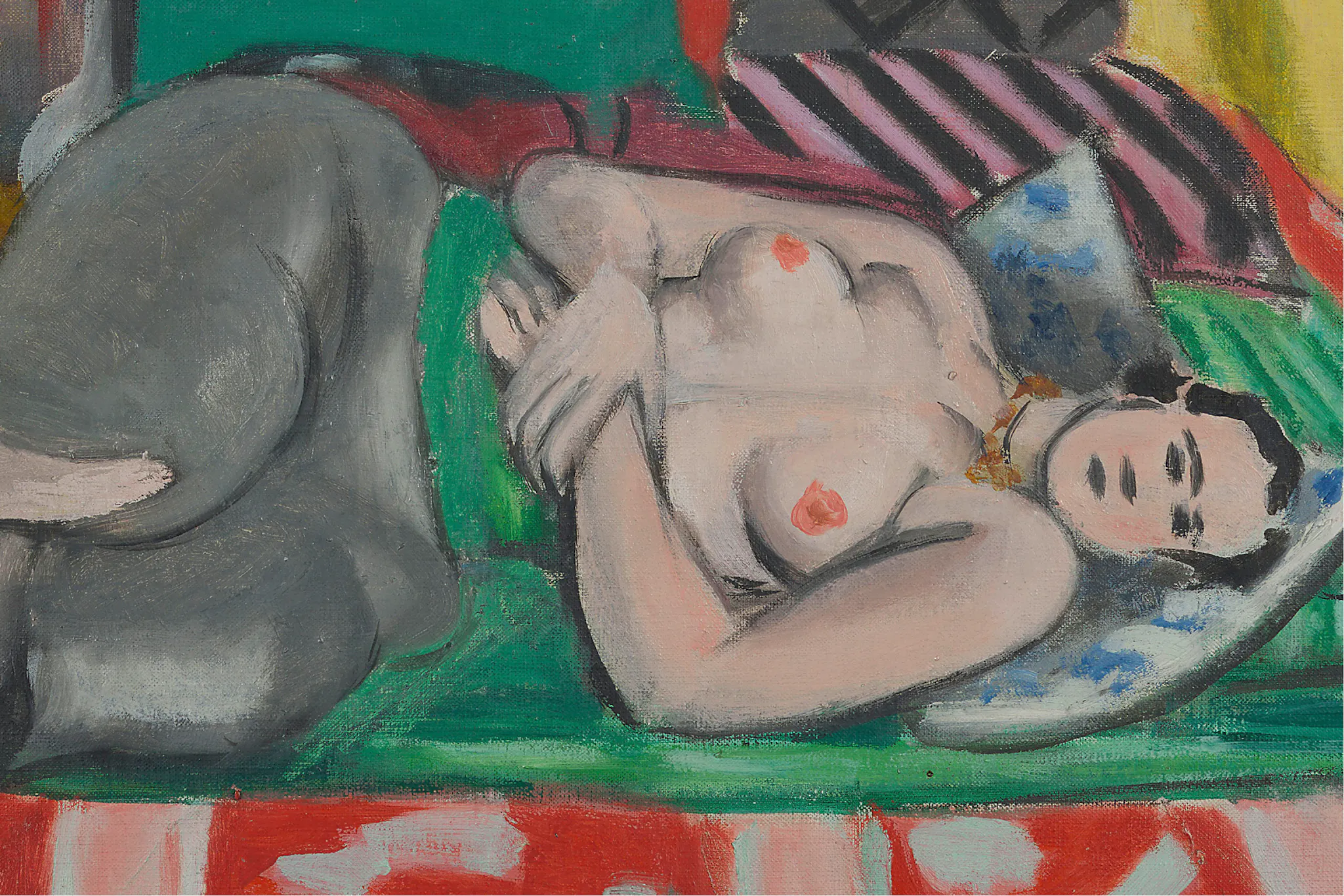
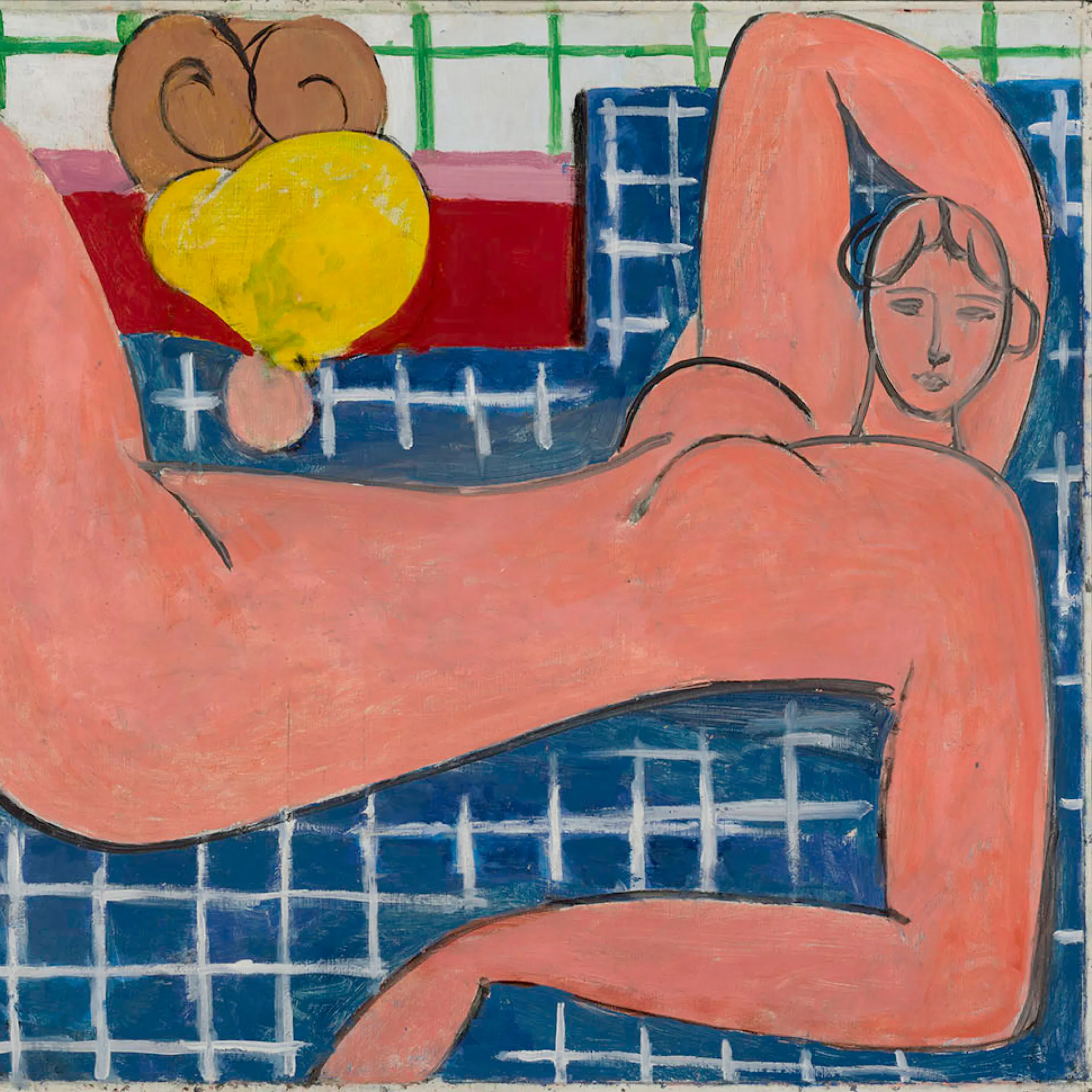
This is abundantly clear in the subjects Matisse chose to paint: in particular the nude female figure. The artist had initially been buoyed from 1904-1917, financially and with publicity, by adventurous collectors, including Sarah Stein (1870-1953) sister-in-law of Gertrude, and in particular Sergei Shchukin (1854-1936), the Russian textile magnate, who had taken great risks socially by purchasing works such as The Dance (the 1910 original), and The Red Studio (1911): erotic or avant-garde abstract subjects. But it was the nude female form that Matisse realised would play well with collectors, and Matisse in the 1930s presents these works, such as the realistically drawn luxuriating and sensuous Large Odalisque in Striped Pantaloons (1925) to the far more abstract lithe and elongated Large Reclining Nude (1935). The latter is presented with the series of black-and-white photographs which Matisse took to record his process. Here we see another ingredient of the master’s charismatic technique: while the curves and volumes of the nude seem to flow and her proportions seem effortlessly constructed; Matisse agonised over every inch of the painting and erased and repainted passages on a daily basis. Regardless of all the sweat, Matisse made the painting look spontaneous, and viewers and collectors responded.
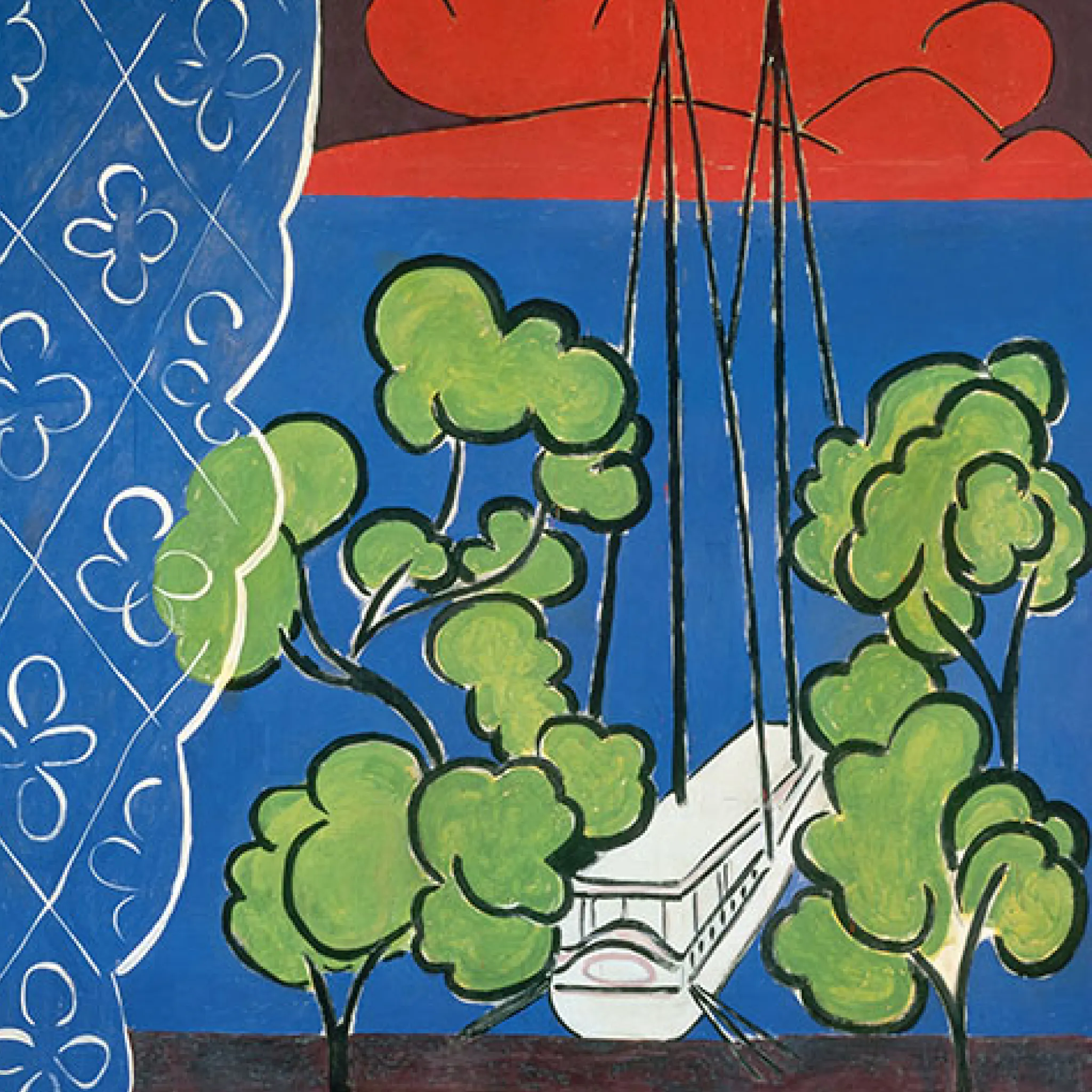
The succeeding rooms of the exhibition display his calming, colourful and beautiful aesthetic to the design of wall hangings and tapestries. He came to a realisation that his once vilified style was now neatly adjacent to a decorative aesthetic, and two paintings: Papeete – Tahiti (Window in Tahiti; Tahiti 1) (1935) and Window at Tahiti II (1935-36) are full-size preparatory sketches for tapestries. Much like his cagey use of the craze for orientalism twenty years earlier, Matisse, in his series of Rumanian blouse paintings incorporates fashion trends into his time-tested odalisque format – incorporating the Romanian blouse – an embroidered peasant outfit popular in the south of France at the time, as in Still Life with Sleeping Woman (1940).
As the show progresses, Matisse begins to start imitating himself, the paintings become less daring and the application of paint and composition anaemic. A mantelpiece created for Nelson A. Rockerfeller’s apartment in New York, The Song (Le Chant) (1938), depicts four fashionably dressed ladies reading, napping, and whispering to each other, but there is none of the rawness, sensuality, or ritual abandon of the Barnes mural. And the colour scheme of the Barnes, an enigmatic selection of greys and pinks, is here replaced in The Song by complementary reds, blacks, and greens. Matisse perhaps was aware that the greatest achievement of his renaissance in the 30s was revisiting his early innovations and reworking them and “upping their visibility.” He also revisited designing sets and costumes for dance performances. He had designed the production for Le Chant du Rossignol for Diaghilev’s Ballet Russe in 1920, and Matisse in the 1930s briefly considers his design – in the form of entrancing black and white clips – of Rouge et Noire (Red and Black) (1937) a collaboration with Dmitri Shostakovich for the Ballet Russe de Monte Carlo. Also briefly alluded to is the kernel of the idea that would eventually become Matisse’s last period, and a truly innovative series that would again place him centre stage in the eyes of the world – his cut.-outs, represented by two works Two Dancers (1937-38) and Small Dancer on Red Background (1938). These collages originated from the painter’s process of using painted pieces of paper to block out his compositions. The cut-outs were simple, expressive and perfect in their way, and they managed to be effortless and pleasing while not even seeming to consider the painter’s slowly fading physical skills – yet another brilliant stroke for Matisse.
Matisse in the 1930s
20 October 2022 – 29 January 2023. Philadelphia Museum of Art
Read more

Listen to audiocasts

 11 min 53s