Cezanne’s timeless paintings eclipse the contradictions
Was the French post-Impressionist wracked with self-doubt?
Visitors to The EY Exhibition: Cezanne at the Tate Modern are greeted by an enigmatic vision of Paul Cezanne (1839-1906) in Self-Portrait with Pink Background (1875). It's his attempt to show himself as a “self-assured and sophisticated modern man,” but it appears he failed, at least from where this writer was standing. His shy, suspicious gaze – pupils wedged into the corners of his eyes – is far from confident, and his unkempt beard and messy hair defy his effort to look cosmopolitan. His brushwork and palette, on the other hand, are incredibly assured.
Despite his brilliant command of paint, it's well documented that Cezanne’s self-belief was often in tatters. He may have been ahead of his time as a pioneer of Post-Impressionism but this didn’t translate into commercial success for the majority of his life, and it wasn’t until he was 35 that he sold a painting to someone he didn’t already know. “I find I am lacking in canvases that might be submitted for the delectation of art lovers,” he wrote in 1887, aged 48. “Wanting to offer for critical appraisal only those studies that might pass muster, I cannot take part in any exhibition.”
He was always an outsider in Paris after he moved there from the south of France in 1861. He cultivated a reputation for himself as a maverick artist from Provence who rejected voguish tastes and he broke with tradition to paint “modern scenes of violence and degradation. The sexualised imagery he often included alludes to society’s discrimination against women as well as a preoccupation with their changing roles in public life,” as the Tate puts it. But his life and art were rooted in uncertainty. Cezanne’s childhood friend, the writer Émile Zola, summed up the artist’s existential crisis in correspondence to one of their mutual pals: “Paul may have the genius of a great painter but he’ll never have the genius to become one. The slightest obstacle sends him into despair.”
Zola’s proclamation was justified but ultimately false. One way or another, Cezanne’s faltering confidence and refusal to conform stoked his interrogation of what it meant to be a modern artist, an endeavour that spanned his entire career, and today he is widely regarded as one of the greatest post-Impressionists. He reinvented painting and – alongside Georges Seurat, Vincent van Gogh, and Paul Gauguin – abandoned his contemporaries’ concern with the naturalistic and spontaneous rendering of light and colour in favour of more symbolism, order, and structure, paving the way for avant-garde movements like Cubism. As Henri Matisse once said, Cezanne was a “sort of god of painting.”
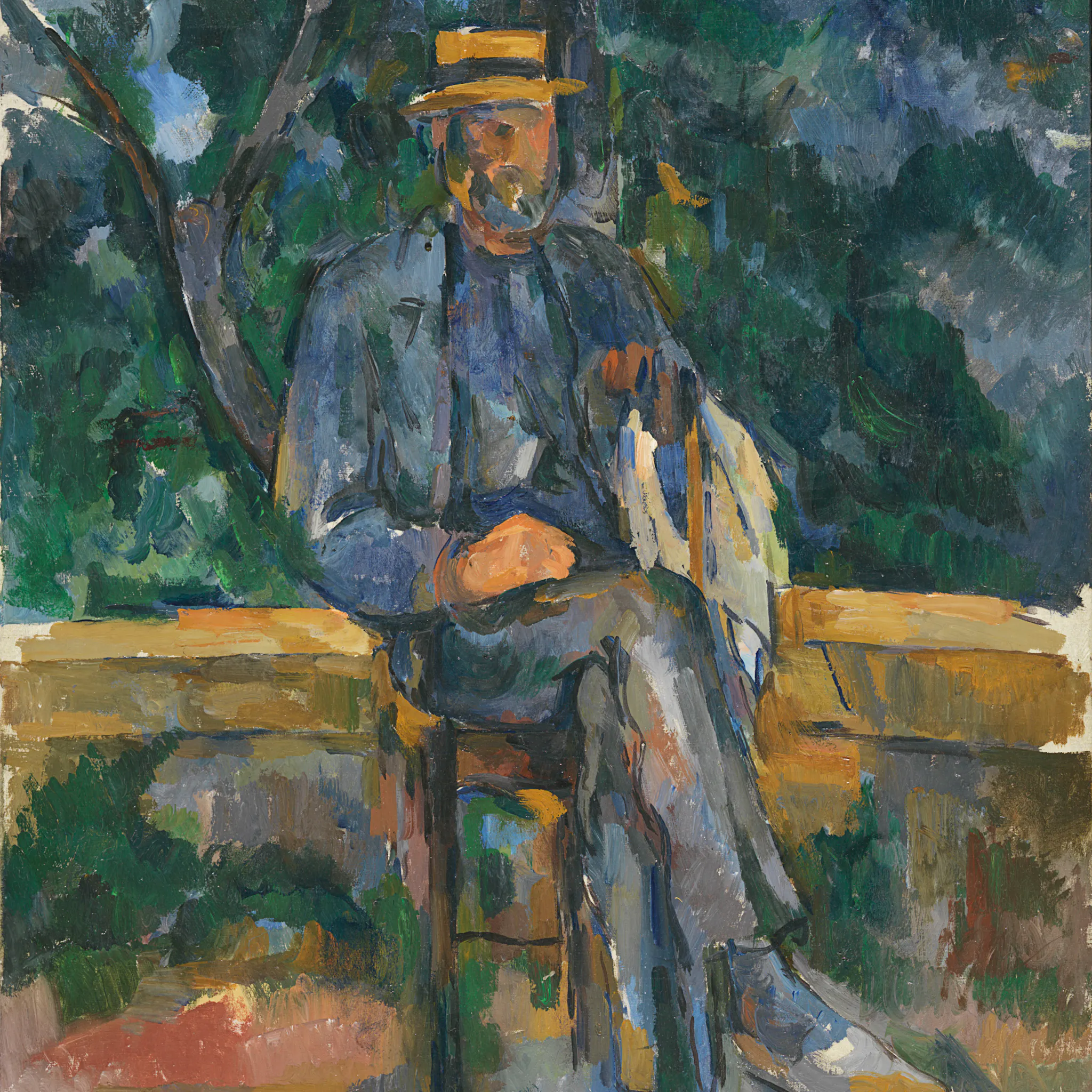
The EY Exhibition: Cezanne is split into two halves. The first explores the artist in the context of time, delving into his life, relationships, and creative circles he was part of, while the second half shows groups of works that are rooted in various themes, including his radical still-lifes and instantly recognisable paintings of bathers.
It must be said, there is something a little obscene about celebrating the career of a struggling artist who, like Van Gogh, enjoyed limited commercial success during his lifetime, under the auspices of Ernst & Young (EY), one of the world’s largest accounting firms. The fact that the exhibition is in the Tate’s Eyal Ofer galleries, named after the Israeli billionaire shipping and real estate magnate, also elicits a wry smile, but Cezanne’s mesmerising paintings eclipse the contradictions.
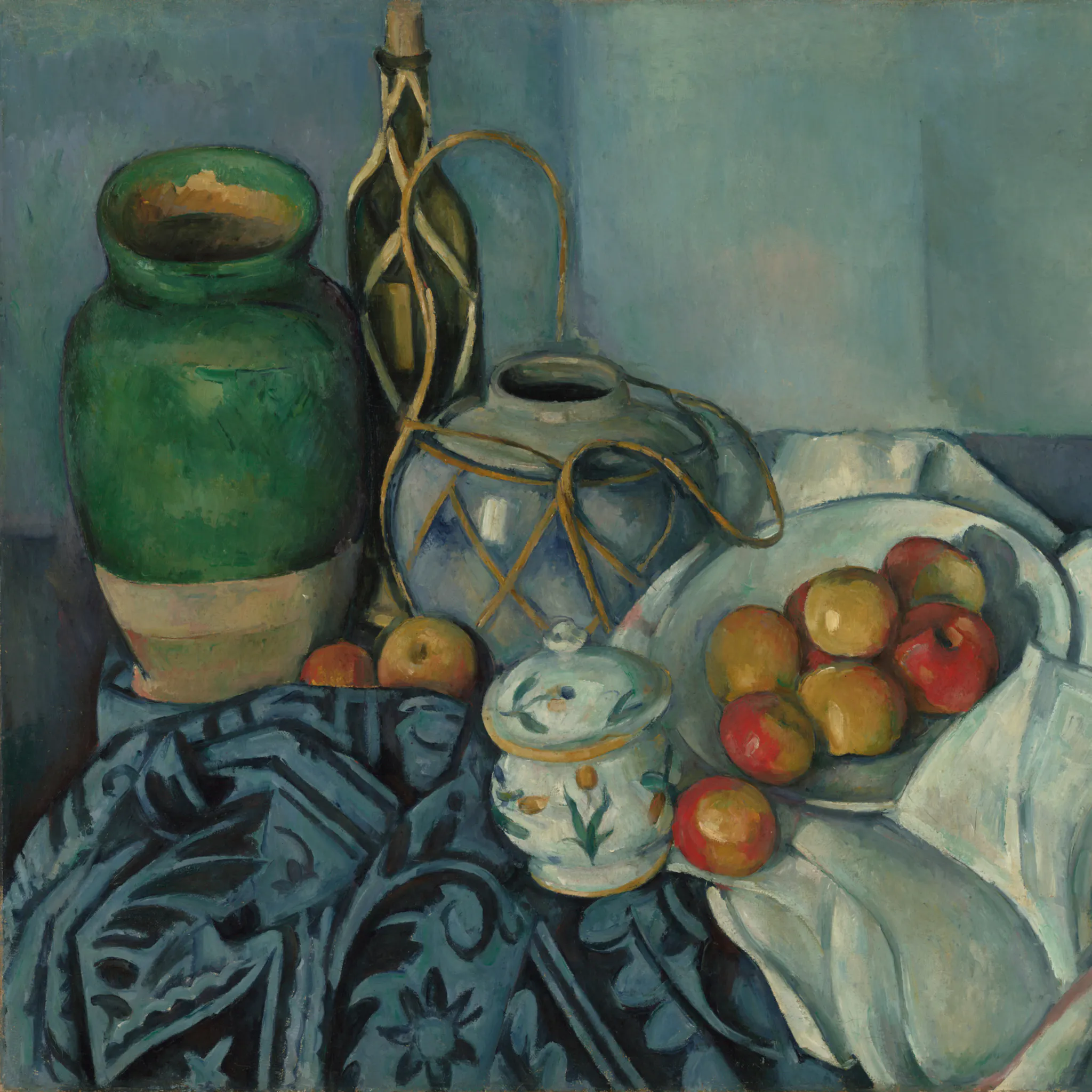
Plastered on the gallery walls are bold pithy statements by the artist that counter his crippling periods of self-doubt – “I paint as I see, as I feel” and “With an apple I will astonish Paris.” His apples still astonish. On show is The Basket of Apples (c.1893), it is an example of how Cezanne sought more structure and subsequently shaped future art movements, leading Pablo Picasso to hail him as the “father of us all.” He was obsessed with painting the fruit (he created more than 270 still lifes featuring apples), which he used to investigate our relationship with the object world, and The Basket of Apples rejected realistic representation in favour of distorting objects to create several perspectives. The composition challenges the idea of linear perspective and instead champions human perspective, which Cezanne argued was far more complex than simply viewing an object from a frozen point in time. The painting contains one of his iconic titled tables, and the heavy modelling, bold brushstrokes, and vibrant colours give the painting a dynamism and density that a more realistic still life could never possess. “Painting from nature is not copying the object,” Cezanne wrote, “it is realising one's sensations.”
Cezanne's success was therefore employing art to scrutinise human perception with unmatched honesty and curiosity. As Natalia Sidlina, curator of international art at Tate Modern and lead curator of the exhibition, explains, “Cezanne put questions at the core of what he was doing, he put the process ahead of the result."
The EY Exhibition: Cezanne
5 October 2022 - 12 March 2023. The Tate Modern, London.
Read more
Listen to audiocasts
 11 min 53s